
Panic on the Bitcoin network triggered one of the largest on-chain fund movements of 2026. Following a security exploit affecting Coldcard cold wallets, brokerage and research firm K33 Research reported that approximately 890,000 BTC (worth over $57.0B) moved in just one week. The phenomenon reflects an unprecedented defensive shift in investor behavior, as holders chose to transfer their assets to centralized platforms or multisig setups to secure their funds.
The Coldcard Crisis and the Chain Reaction Among Holders
The primary catalyst for this on-chain volume anomaly was the incident detected in Coldcard’s infrastructure—a flagship hardware wallet brand favored by maximalists for its air-gapped security standards. However, fear did not stop with Coldcard users.
According to Vetle Lunde, Head of Research at K33, uncertainty quickly spread to users of other popular devices like Ledger and Trezor. Facing perceived risk, thousands of holders opted to execute a massive migration toward regulated centralized custodians or multisig architectures, which require multiple private keys to authorize a transaction.
Frozen Volatility vs. Record On-Chain Activity
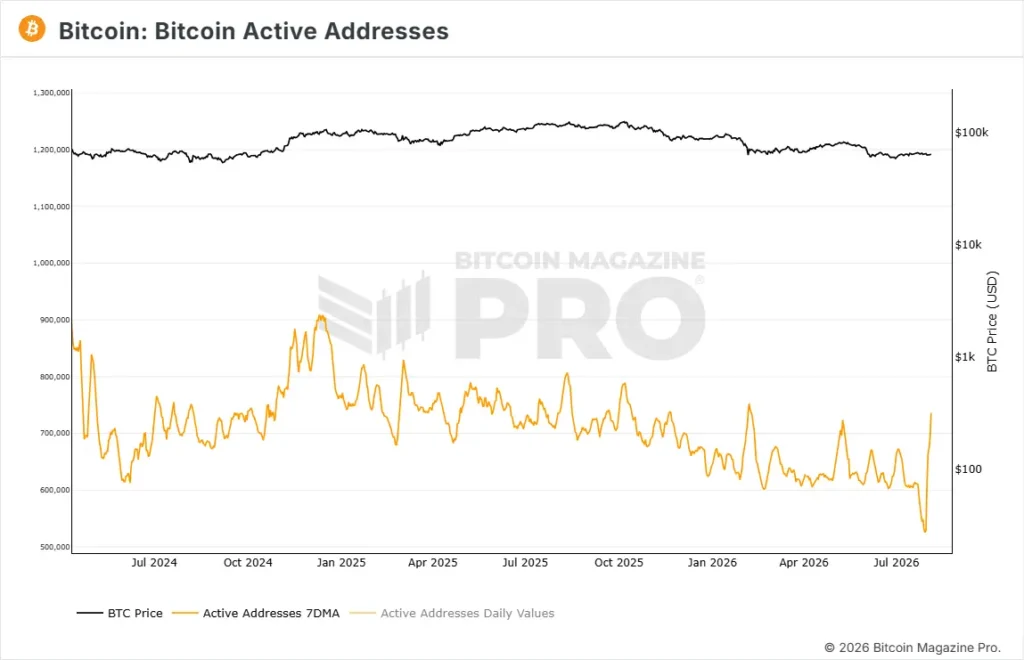
The truly fascinating aspect of this event is the stark disconnect between on-chain activity and the price chart. While the network experienced massive transactional panic, bitcoin traded within an extremely tight range:
Stable Price Action: By July 29, 2026, bitcoin traded at $63,901 with 525,536 active addresses (7-day moving average), according to Bitcoin Magazine Pro data. By August 4, 2026, the price held steady at $64,063 while active addresses surged to 736,173.
Volatility Lows: Bitcoin recorded its tightest 30-day trading range since 2023, bringing its realized volatility below traditional equity indices like the Nasdaq 100.
This behavior confirms that the massive token movement did not stem from market liquidations or sell-offs, but rather from a custody restructuring and security redistribution process driven by operational panic.
What Does This Panic Mean for Future Price Action?
“The panic is visible on-chain,” Lunde highlighted in his report. However, for analysts with historical perspective, this scenario is not necessarily bearish.
Historically, extreme spikes in on-chain activity driven by factors other than financial speculation often coincide with local price bottoms. Once the dust settles and funds sit securely in new high-security addresses, sell pressure tends to exhaust itself, laying the groundwork for healthy consolidation or an eventual bullish recovery.
Impact
In the short term, price stability could persist as users finish reorganizing their wallets. In the medium term, the mass migration toward multisig setups and institutional-grade custodians will strengthen holder resilience, reducing floating exchange supply and reinforcing market structure.
Disclaimer: This article is strictly for informational and educational purposes. It does not constitute financial or investment advice.

Communications Professional. Crypto Enthusiast. Economic Journalist. Bitcoiner & Altcoiner.