
Zcash is executing a radical strategic pivot. Following three years of intense internal restructuring aimed at overcoming governance disputes and low adoption, developers of the premier privacy network have unveiled high-impact milestones. From implementing Quantum Recoverability technology into its core protocol to shield against future computing threats, to massive performance upgrades in its Zodl mobile wallet, this new Zcash upgrade marks a major milestone. The project has moved past academic theory to focus on real-world tools that hand power back to users and strengthen network fundamentals.
Tomorrow’s Shield: The Zcash Upgrade Against Quantum Threats
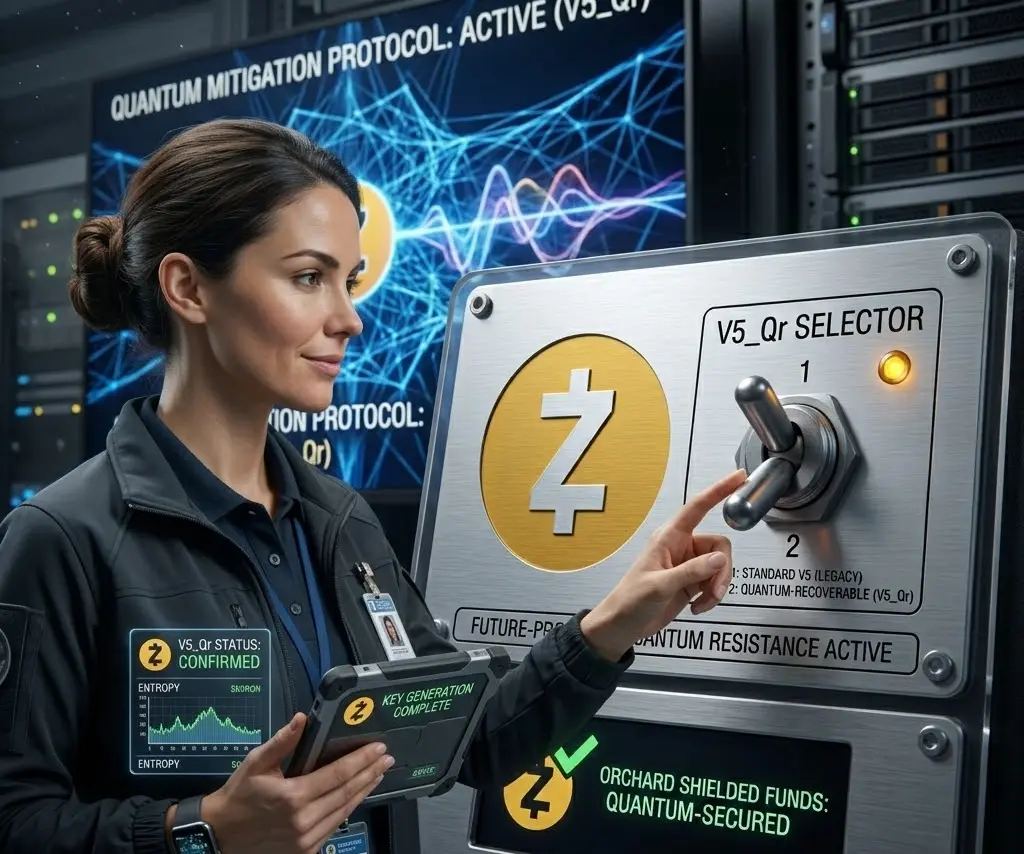
The Zcash team is playing 4D chess by anticipating future technological risks. The introduction of the Zcash Quantum Recoverability (V5_Qr) feature allows for the recovery of funds from the shielded pool (Orchard) if quantum computing or discrete logarithm breaking attacks compromise current privacy protocols.
On a technical level, the current development functions as a selector during wallet construction for Orchard QR change notes. The brilliance of this implementation lies in the fact that it occurs while the transaction is still serialized, signed, and treated by the consensus as a regular V5 transaction.
What does this mean for the market? While Bitcoin’s underlying technology opened the doors to decentralized transparency, Zcash is paving a path of absolute long-term resilience. By protecting funds against future quantum supremacy today, they safeguard the network’s value against technological black swans that could wipe out other blockchains.
Community Rebirth and the Success of the Zodl Wallet
Zcash’s evolution is no accident. According to ecosystem lead Josh Swihart, current growth is the direct result of three years of deep reforms in governance, product, and narrative. The project transitioned from a period of stagnation and centralization to an open, community-driven phase, eliminating centralized direct funding and expanding the use of its private pool.
This shift in philosophy crystallized in its flagship product: the Zodl mobile wallet, designed to make everyday privacy accessible. Mobile app adoption data reinforces this trend:
iOS: 41.4k unique installations (+0.8k in the last cycle) and a total of 49.2k downloads, boasting a stellar 4.9★ rating.
Android: A consolidated install base of 15.3k users and a total of 49.5k downloads including the open beta (+0.7k), maintaining a 4.26★ score.
Unlike the native transparency that characterizes highly liquid assets like bitcoin, the Zcash upgrade across its Zodl mobile suite (version 3.3.1 on iOS to patch Swap/Pay bugs and version 3.4.0 in final QA) aims to allow any retail user to safeguard their financial sovereignty without technical friction. Upcoming releases will feature advanced support for Keystone hardware wallet recovery, full transaction history discovery, and multi-currency conversions.
Critical Technical Upgrades: Resilience and Migration to Zallet
The Zcash upgrade isn’t limited to mobile software; the network’s core infrastructure received critical maintenance to ensure system stability. The Zcash Foundation (ZF) rolled out an urgent release of zcashd v6.12.3 as an essential security hotfix, alongside SQLite database improvements for mobile clients.
In parallel, Zallet development (currently in its Alpha.4 phase) is making steady progress with the integration of key import/export, shielded coinbase support, and PIR proof validation. This effort will streamline the final migration away from the legacy zcashd system toward a lighter ecosystem.
For its part, Foundation engineering launched Zebra v4.4.1, focused on resolving memory allocation during block deserialization and upgrading RPC call security. Additionally, the release of FROST v3.0.0 optimizes threshold cryptography for multi-party signatures, raising the network’s institutional security standards.
What This Means for Investors
Zcash is successfully completing its metamorphosis: evolving from a theoretical cryptography project prone to internal disputes into a robust, product-focused software ecosystem primed for mass adoption in 2026. By tackling mobile usability issues and deploying proactive defenses against quantum computing, Zcash separates itself from the purely speculative narrative surrounding other crypto assets. In the medium term, as global regulation puts pressure on privacy and users demand secure tools, this protocol’s technical resilience could translate into a powerful fundamental value catalyst for its ecosystem.
Disclaimer: The information contained in this article is for informational and educational purposes only. It does not constitute financial advice or an investment recommendation. Cryptocurrencies are highly volatile assets; conduct your own research before making financial decisions.

Communications Professional. Crypto Enthusiast. Economic Journalist. Bitcoiner & Altcoiner.