
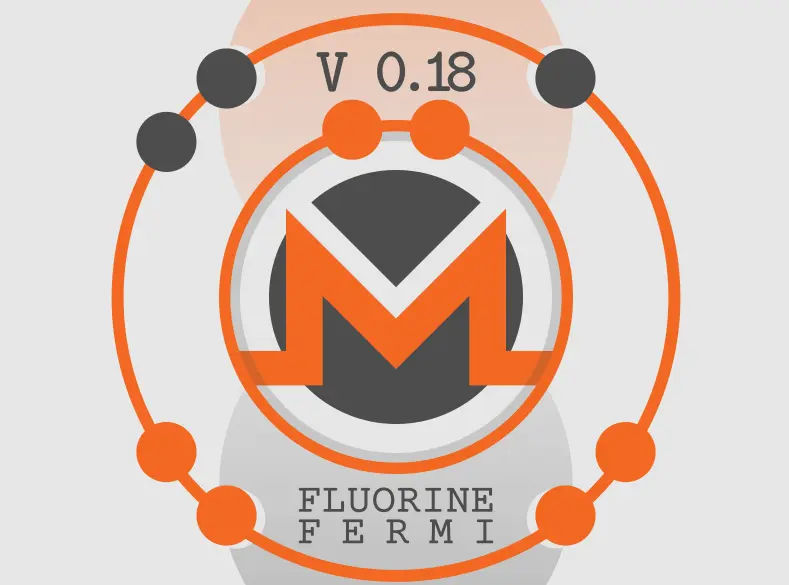
The Monero development team officially launched Monero GUI 0.18.5.2, dubbed “Fluorine Fermi”, a technical patch focused on resolving critical user experience and operational security bugs. The update arrives to fix an annoying wallet generation issue during first-time use, optimize in-memory wallet creation, and prevent precision loss in high-value transactions. In an ecosystem where usability often serves as the Achilles’ heel for privacy-focused cryptocurrencies, this version ensures a seamless and secure entry point to the network.
Why Does Monero GUI Version 0.18.5.2 Matter to the Community?
For those who value financial sovereignty and absolute anonymity, Monero (XMR) remains the gold standard. However, even the most robust encryption loses its appeal if the graphical interface glitches from the start.
The Monero GUI 0.18.5.2 update tackles this problem head-on. The most critical fix resolves issue #4657, which impacted Monero wallet generation when running the application for the first time. For a user accustomed to fast “plug-and-play” interfaces, encountering an error while generating a private key represented an unnecessary barrier to entry. With this deployment, the onboarding process is flawless once again.
Zero Margin for Error: Financial Accuracy and Security Alerts
Beyond the initial fix, the team delivered solutions for technical nuances that protect user capital:
High-Value Transfer Accuracy: Fixed a loss of mathematical precision when generating payment requests with significant volume. In an institutional or high-capital trading environment, losing decimals to an interface formatting bug is unacceptable.
KDF Settings Warnings: The application now displays an alert when a user attempts to modify Key Derivation Function (KDF) rounds. This prevents inexperienced users from unwittingly weakening their wallet encryption passwords.
In-Memory Creation in the Wizard: The setup wizard now generates wallets directly in RAM before writing them to disk, reducing temporary metadata traces during setup.
The release resulted directly from 6 developers contributing 50 commits and over 1,120 lines of code to keep privacy bug-free.
Ecosystem Impact and XMR Price Action
On the market side, minor software releases rarely push an asset’s price overnight toward $200 or $300. However, for Monero, the network’s fundamental value lies in the resilience of its infrastructure. A buggy official client erodes trust; polished software reinforces the long-term investment thesis.
Consistent maintenance by independent contributors (such as tobtoht, selsta, and munzzyy) proves that despite global regulatory pressure against privacy coins, the developer community remains more active than ever.
Should You Update?
If you use Monero’s official graphical wallet on Windows, macOS, or Linux, the short answer is yes. You can download binaries directly right now from the official site at getmonero.org. As a cybersecurity best practice, always remember to verify the SHA256 hashes provided in the official announcement before running any installer file.
Disclaimer: This article is strictly informational and does not constitute financial advice or an investment recommendation. Cryptocurrencies are volatile assets; always do your own research (DYOR) before trading.

Communications Professional. Crypto Enthusiast. Economic Journalist. Bitcoiner & Altcoiner.