
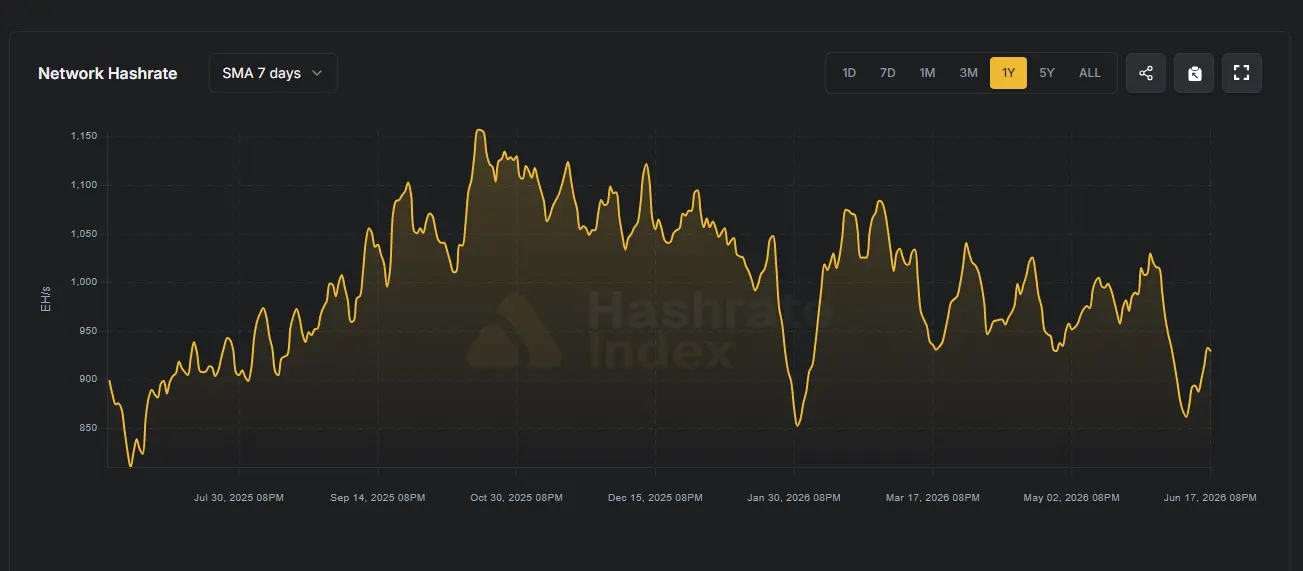
The Bitcoin network is experiencing an unprecedented shakeup. For the first time in history, the hashrate—the total computing power securing the network—is posting a massive, prolonged correction after hitting an all-time high in October 2025. According to Hashrate Index data based on the 7-day simple moving average (SMA 7 days), this miner exodus reacts directly to the drop in bitcoin’s price, triggering a miner capitulation that forces less efficient operations to turn off their machines.
An All-Time Drop in Processing Power
According to on-chain metrics, global network hashrate hit a massive peak of 1,126 EH/s (Exahashes per second) on October 19, 2025. Since then, the chart shows a steady downward slope, dragging the indicator down to 916 EH/s by mid-June 2026.
This reduction of over 18% in processing power is no technical glitch; it represents the shutdown of hundreds of thousands of mining rigs (ASICs) worldwide. The cause boils down to pure math: as bitcoin prices suffer a prolonged decline, generated revenues no longer cover the high electricity bills of inefficient operators, pushing them into a capitulation scenario.
Mining difficulty adjusts to save the protocol
This massive disconnect directly impacts another vital metric: Bitcoin mining difficulty. The protocol automatically adjusts every 2,016 blocks (approximately two weeks) to guarantee that block production times stay close to 10 minutes.
The Peak: Mirroring the hashrate, network difficulty touched all-time highs in October 2025, sitting at 155.97 T while the asset price hovered around $114,559.
The Correction: By June 2026, with the bitcoin price retracing to the $63,332 zone, difficulty dropped sharply to 138.96 T.
When difficulty drops, the Bitcoin algorithm eases the required workload. This opens a unique window of opportunity for miners with lower operational costs or access to extremely cheap energy to enter the ecosystem or increase their share, absorbing the market share left behind by fallen competitors.
Mirroring Past Crises: A Disguised Buy Signal?
Current market behavior evokes memories of previous cycles, though at a much smaller scale:
April – June 2024: After marking all-time highs driven by the Halving, the price suffered a retracement that forced operations to pause, temporarily cooling the hashrate before resuming the bull rally.
May – June 2021: China’s historic mining ban caused a massive crash in hashrate, which the network absorbed and reprogrammed within months thanks to its algorithmic resilience.
Bitcoin is the only asset in the world that self-regulates this way. If the price drops, the cost of securing the network automatically cheapens. Historically, deep miner capitulation periods—where only the strongest survive—have marked macro market bottoms. For analysts and the Millennial community looking for strategic entry points, this technical reset typically flashes one of the strongest long-term buy signals in the crypto ecosystem.
| Network Metric | Peak (October 2025) | Current (June 2026) | Percentage Change |
|---|---|---|---|
| Network Hashrate | 1,126 EH/s | 916 EH/s | -18.64% |
| Mining Difficulty | 155.97 T | 138.96 T | -10.90% |
| Bitcoin Price (USD) | $114,559.41 | $63,332.01 | -44.71% |
Disclaimer: This article is purely for informational and educational purposes. Investments in crypto assets carry high financial risk. Past performance does not guarantee future results. Conduct your own research before investing.

Communications Professional. Crypto Enthusiast. Economic Journalist. Bitcoiner & Altcoiner.