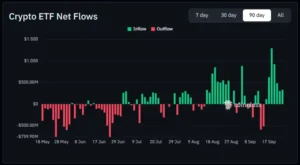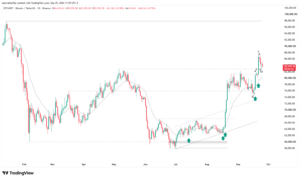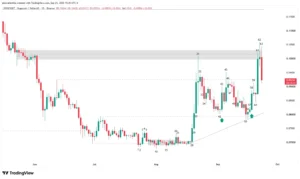

The institutional market just experienced a major shock. Last week, bitcoin ETFs recorded their largest net capital outflow in over a year, hit by a combination of geopolitical factors and drastic shifts in expectations regarding Federal Reserve (FED) monetary policy. With the asset price under pressure and investors fleeing to the US dollar, the bullish narrative faces a harsh stress test that redefines strategies for the end of the year.
The Largest Institutional Exodus Since March 2025
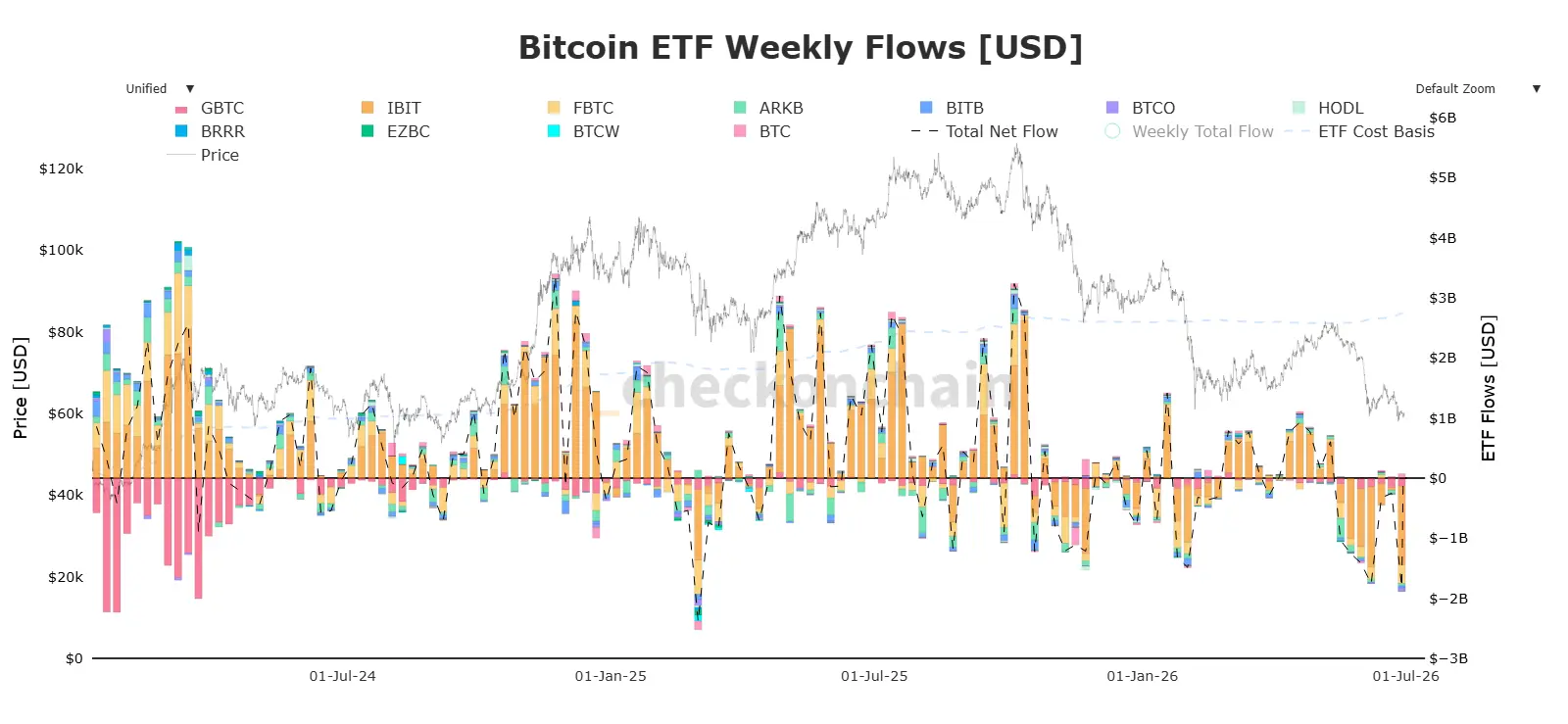
Risk appetite cooled significantly on Wall Street. According to analyzed data for the week of June 26, 2026, from the CheckOnChain chart, total net flows posted a sharply negative balance of -$1.8135B (one billion eight hundred thirteen point five million dollars). This institutional crash represents the worst streak of outflows since the historic week of March 1, 2025, when investment vehicles saw a record -$2.3905B drained.
The main culprit behind the recent bleeding was BlackRock’s IBIT fund, which led weekly losses with gross outflows of -$1.3035B, followed by Fidelity’s FBTC with -$314.9M. While bitcoin trades around $59,644, the institutional average cost price for ETFs (ETF Cost Basis) sits substantially higher at $84,562, leaving a large portion of institutional investors in unrealized loss territory.
The FED and the Hormuz Effect: The Market Recalculates Rates
The trigger for this panic does not originate solely within the Bitcoin technology ecosystem, but on the global macroeconomic chessboard. Initially, whales and traders bet heavily that the FED would execute an interest rate hike toward a 4% to 4.25% range by December of this year. However, the surprise reopening of the crucial Strait of Hormuz crashed international oil prices, removing immediate inflationary pressures.
As a result, according to data from the CME Group’s Fed Watch Tool, the probability of seeing a rate hike by the end of the year deflated drastically to 29.5%. In contrast, the largest minority of investors (40.8%) now projects a scenario of absolute caution, maintaining that interest rates will remain unchanged. For the upcoming meeting on July 29, the outlook is one of clear anticipation: 68.5% estimate that the interest rate will freeze at 3.75%, while a minority 31.5% still gambles on immediate monetary tightening.
Pressure on Risk and the Super-Dollar: What Comes Next?
The golden rule of current financial markets remains unchanged: if interest rates stay higher for longer, risk assets face severe pressure due to the lack of cheap liquidity. At the same time, the US dollar strengthens against other currencies and commodities, stripping attractiveness from the cryptocurrency market.
In the short and medium term, the stability of the Bitcoin network and the technical confidence in its protocol are not in question, but bitcoin price action will depend entirely on the macro narrative. If the FED confirms a more dovish stance following the drop in commodities, bitcoin ETFs could see a rapid return of capital seeking discounted buying opportunities.
Disclaimer: This article is for informational and educational purposes only. It does not constitute financial advice or an investment recommendation. Trading crypto assets involves high levels of risk.

Communications Professional. Crypto Enthusiast. Economic Journalist. Bitcoiner & Altcoiner.