
Project Rubicon has just marked a milestone in Web3 interoperability with the official launch of Rubicon Bridge V2. This upgrade, built on Chainlink’s CCIP protocol, positions itself as the canonical route for connecting the Bittensor ecosystem with the Base network (Coinbase’s L2). The goal? To allow the asset, bittensor ($TAO), and tokens from its most important subnets to flow toward where the market’s deepest liquidity resides, all while maintaining staking rewards.
More Than a Bridge: Liquid Staking and Institutional-Grade Security
Rubicon Version 2 redefines what we expect from a cross-chain solution. By integrating Chainlink’s Cross-Chain Interoperability Protocol (CCIP), Rubicon adopts the industry’s most rigorous security standard. This is vital for investors looking to move capital between networks without the vulnerability risks that have plagued traditional bridges.
However, the team has been clear: Rubicon is a liquid staking solution first, and a bridge second. This means users can move bittensor ($TAO) to the Base network to participate in DeFi protocols—such as providing liquidity on DEXs—without giving up the yields originally generated on the Bittensor network. It is, in essence, unlocking AI capital so it can work within the Ethereum ecosystem.
Market Impact: $700,000 in TVL and Counting
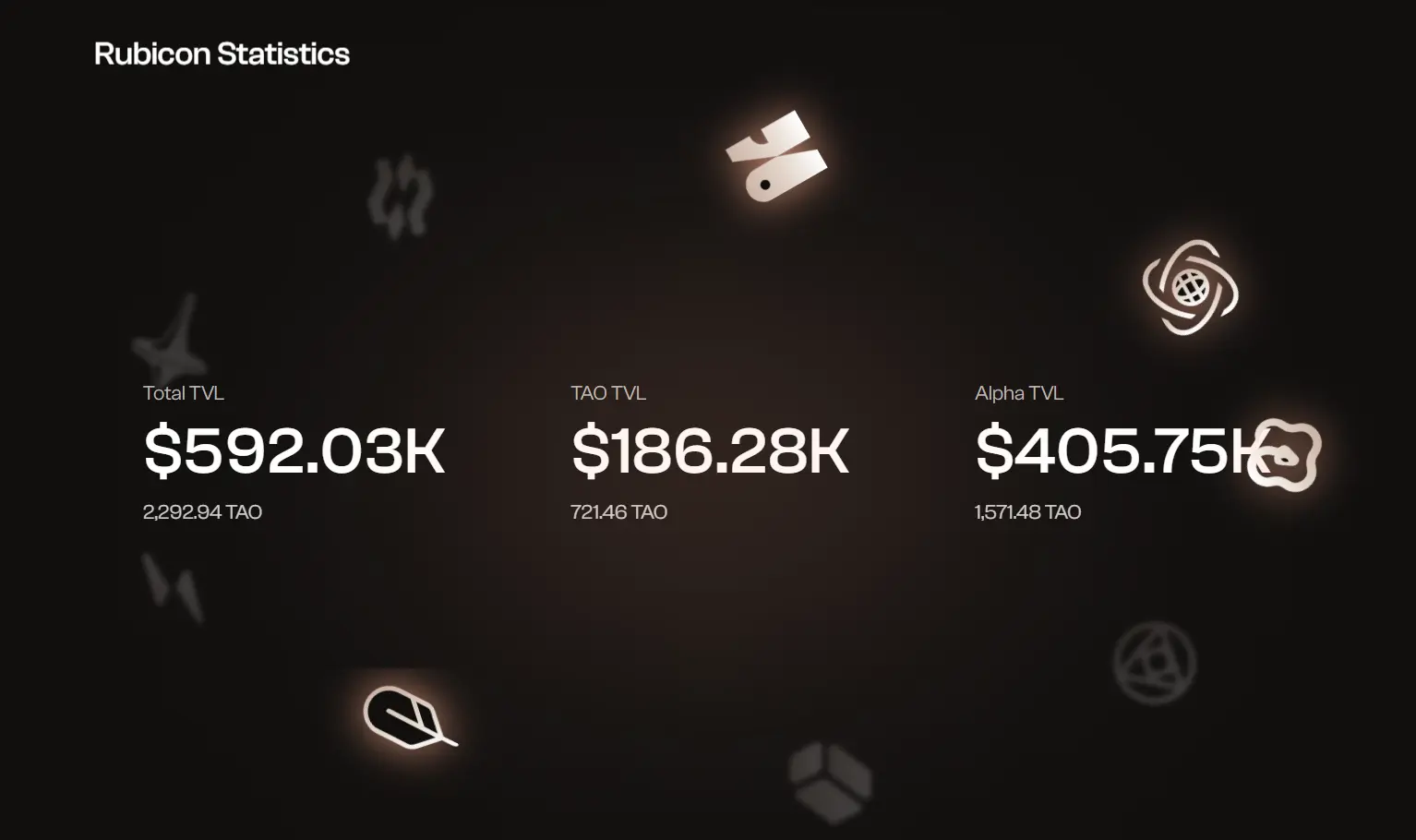
At launch, Rubicon is already reporting approximately $700,000 in Total Value Locked (TVL) between bittensor and “alpha” tokens from major subnets. For enthusiasts of this ecosystem, this represents a strategic victory. Historically, $TAO liquidity has been fragmented; now, it has a direct bridge to the millions of users and capital already residing on Base.
In market terms, bittensor benefits from an infrastructure that reduces entry friction for new buyers. Facilitating access to this asset through faster and cheaper networks could be the necessary catalyst for a new stage of price discovery, considering the Bittensor network continues to expand its number of active subnets.
Toward Fluid On-Chain AI
The integration of subnet tokens is the most disruptive feature. Bittensor functions as an orchestra of digital commodity markets, and allowing these assets to trade on Base opens the door to new yield and arbitrage strategies.
In the short term, Rubicon’s TVL will likely experience accelerated growth as investors discover the efficiency of moving their AI assets to the Base network. Chainlink’s security and Base’s efficiency make this V2 the missing piece for the global expansion of $TAO.
Disclaimer: This report is for informational purposes only and does not constitute financial advice. Cryptoasset investments carry high risk. Always conduct your own research before investing.

Communications Professional. Crypto Enthusiast. Economic Journalist. Bitcoiner & Altcoiner.