
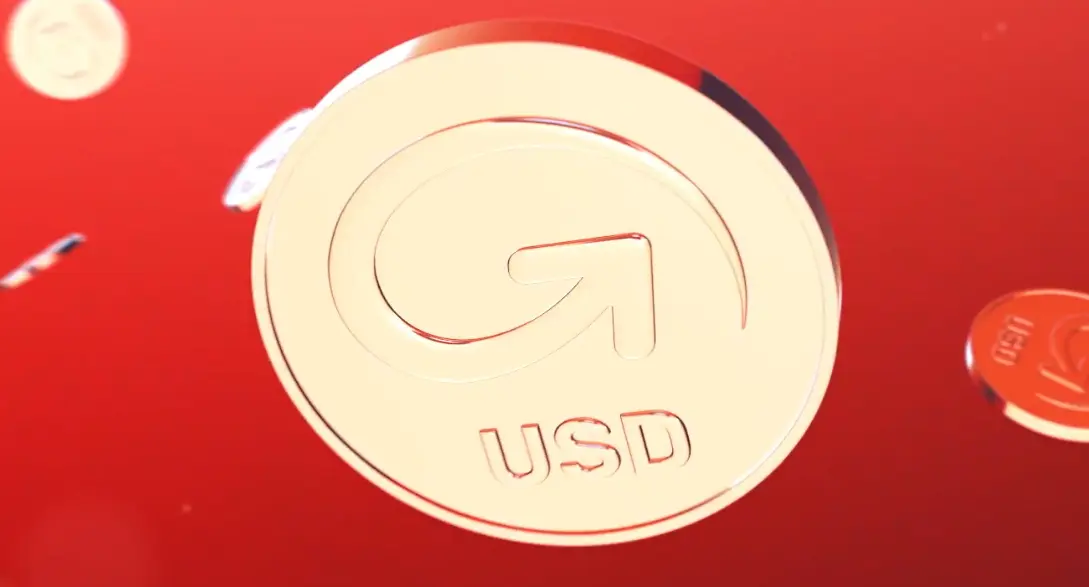
Global remittance giant MoneyGram took its boldest step in recent history by launching MGUSD, its own US dollar-pegged stablecoin issued natively on the Stellar network. Following five years of pilot programs and technological integration, this move does not aim to attract large investment funds or traders. Instead, it seeks to radically transform the speed and cost of cross-border payments for billions of people underserved by traditional banking.
A Five-Year Partnership Bears Fruit
The official announcement, shared by Stellar.org and top executives at the firm, marks a milestone in the convergence of traditional finance (TradFi) and decentralized finance (DeFi). Company executive Anthony Soohoo emphasized that developing MGUSD was not an overnight decision:
“This is the result of five years of testing stablecoins in the real world. The result is a stablecoin designed with a clear purpose: to power the global MoneyGram network.”
Unlike other volatile crypto assets like bitcoin, which users often employ as a store of value or a speculation tool, MGUSD is born with a purely transactional utility. Industry crypto heavyweights like M0, Stablecoin, and Fireblocks co-developed the infrastructure, guaranteeing the highest standards of institutional security from day one of its US launch.
Why the Stellar Network? Efficiency Over Traditional Banking
For digital-native users seeking efficient alternatives, the choice of the Stellar network is no coincidence. While sending money through international banking channels typically takes days and incurs high fees, the Bitcoin or Ethereum architectures sometimes suffer from congestion and variable costs.
In contrast, developers designed the Stellar network from its inception for high-speed digital asset exchange at fractions of a cent per transaction. MGUSD will act as MoneyGram’s “connective tissue,” enabling almost instantaneous settlement for international remittances.
The Impact on the Crypto Ecosystem and Remittances
This launch represents a massive validation for regulated stablecoins. By connecting its suite of financial services with MGUSD, MoneyGram not only competes against other market options like USDT or USDC, but also redefines the use of the Stellar network as the main highway for global money. The focus centers 100% on the everyday user: families who depend on money transfers and global communities that need to move capital without losing a significant percentage along the way.
Short and Medium-Term Impact
In the short term, we expect progressive adoption within the MoneyGram app and network in the US, facilitating the fiat-to-crypto on-and-off ramps. In the medium term, the arrival of MGUSD on the Stellar network will pressure other traditional payment giants (such as Western Union) to accelerate their own Web3 strategies, consolidating stablecoins as the industry standard for global money movement.
Disclaimer: This article is purely informational and educational. It does not constitute financial advice or an investment recommendation. The views expressed do not reflect a position to buy or sell any digital asset.

Graphic design student. Illustrator. Exploring cryptography and blockchain, and creating NFTs.