
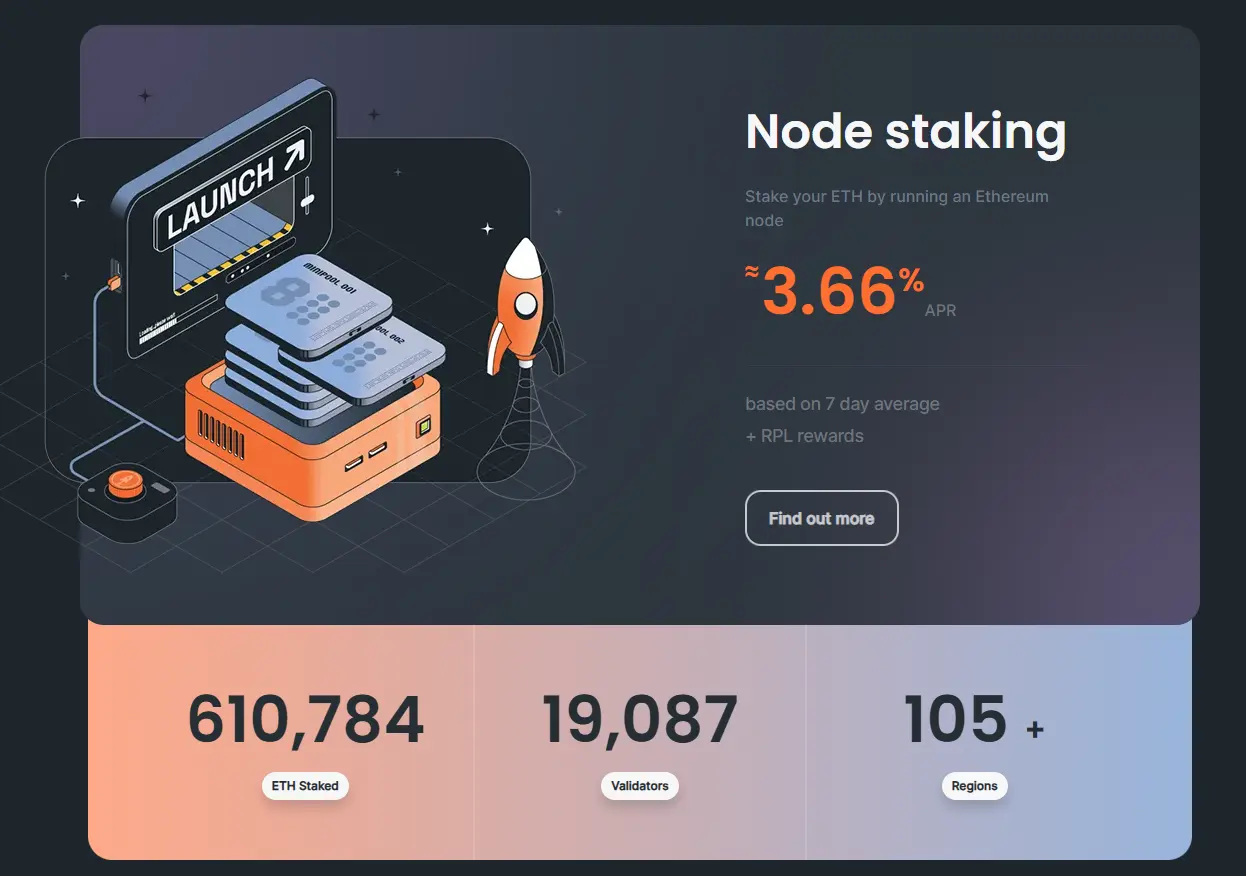
Decentralized Ethereum staking giant Rocket Pool just wrapped up two weeks of intense internal moves. In a pivotal shift for its macroeconomic health, the community approved a critical RPL inflation adjustment proposal via governance vote, designed to restructure network incentives. This decision coincides with a slight contraction in direct operational metrics: the supply of the protocol’s liquid staking token, rETH, fell -1.3% to 323,054 units, accompanied by a minor dip in its node operator base (-0.9% to 1,481) and active minipools (-0.2% to 18,543). Far from raising red flags, this reset looks like the prelude to a larger technical consolidation.
The Governance Vote: Lower Issuance, More Long-Term Value
The standout event of the fortnight was the successful passage of the proposal in the pDAO (Protocol Governance) to modify the inflation of its native token, RPL. In the liquid staking ecosystem, excessive token issuance often dilutes value for long-term holders if network demand fails to scale at the same pace.
By capping or adjusting this inflation rate, governance aims to drive scarcity and improve direct value capture for the token. For investors closely watching the price of RPL (which is hovering in the $1.70 range), this tokenomic tightening intends to reinforce the collateral that node operators must mandate lock within the platform.
Emergency Upgrades and Preparations for Saturn 2
On the software development front (Smart Node), the team rolled out version v1.20.5 as a priority. This update was labeled “high priority” for those running the Lighthouse consensus client and “medium priority” for Nimbus. In practical terms for crypto investors: these infrastructure optimizations prevent out-of-sync losses (network penalties or slashing) and keep the protocol secure while research and design work continues for Saturn 2.
Saturn 2 represents the next major frontier for Rocket Pool. Its core strategic goal is to defend and maximize rETH yield against centralized competitors by enabling faster, institutional-grade withdrawals and exploring lower capital entry requirements for operators.
Additionally, the protocol demonstrated corporate maturity by joining a select group of 15 crypto platforms that completed the standardized Form B-2 filing with analytics firm Blockworks, raising transparency standards across the industry.
Market Outlook: Where Is Rocket Pool Headed?
In the short term, the mild drop in rETH supply and node count reflects profit-taking and capital restructuring following the rollout of the initial Saturn upgrade phases. However, the agility shown in patching the software with v1.20.5 and the community’s resolve to curb unnecessary RPL inflation demonstrate that core fundamentals remain rock solid. If Saturn 2 delivers on its promise to optimize rETH yield, institutional appetite for this non-custodial Ethereum alternative (which allows participation starting at just 0.01 ETH) could experience a major resurgence in the second half of the year.
Disclaimer: The content provided herein is for educational and informational purposes only and does not constitute financial advice or investment recommendations. Cryptocurrencies and staking products carry a risk of capital loss.

Graphic design student. Illustrator. Exploring cryptography and blockchain, and creating NFTs.