
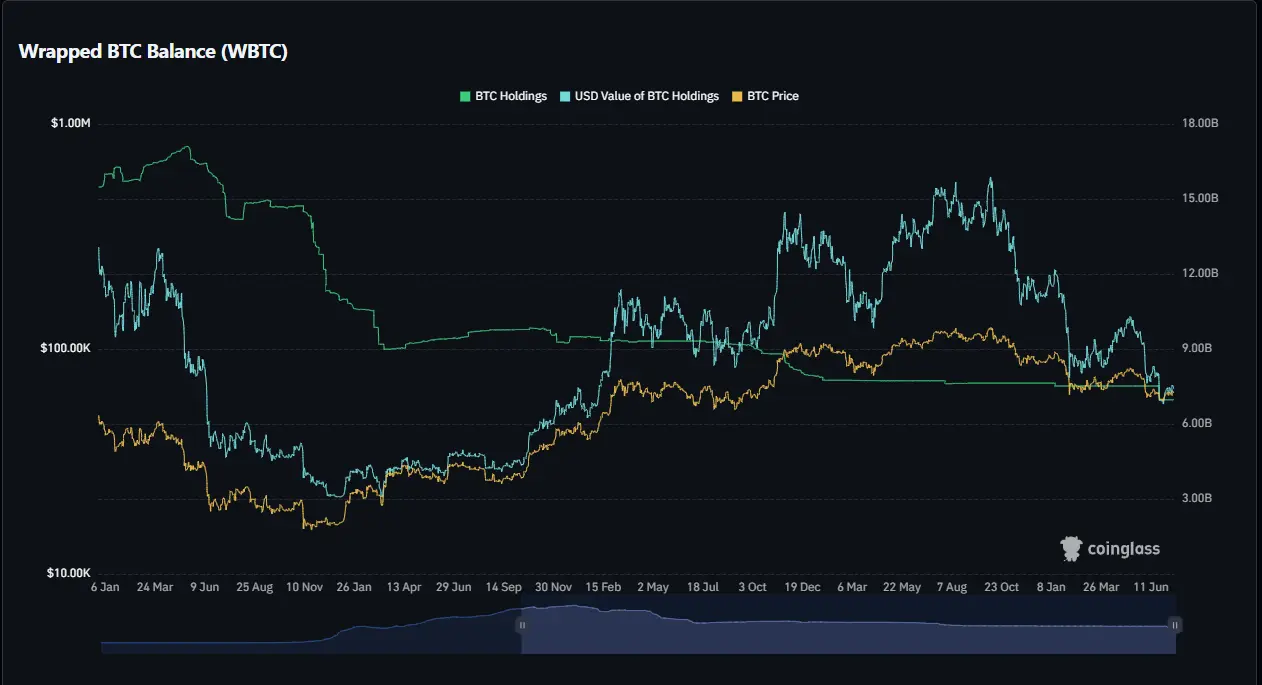
A quiet but massive shift is happening beneath the surface of the decentralized finance ecosystem. According to the latest data compiled as of July 17, 2026, the total Wrapped Bitcoin (WBTC) balance held in DeFi contracts shows a sustained decline from its all-time highs, currently sitting at 116,152 WBTC. This equates to a market value of $7.43B at a unit price of $63,971.00. This token retreat is not a simple price fluctuation; it is a direct indicator of how large institutional and retail investors are reassessing their risk and liquidity strategies across the blockchain.
What Is Wrapped Bitcoin and Why Does It Dominate the Financial Scene?
To understand the magnitude of this movement, we must first decode the technical concept. Wrapped Bitcoin (WBTC) is an ERC-20 token running on the Ethereum network that is backed 1:1 with real Bitcoin (BTC).
Because the native Bitcoin and Ethereum blockchains cannot communicate directly, WBTC acts as a “financial passport.” A custodian stores the real Bitcoin in a cold vault and mints an identical amount of WBTC tokens on Ethereum. This allows Bitcoin holders to move the value of their flagship asset into the world’s largest smart contract ecosystem without selling their original positions.
The Art of Locking BTC in DeFi: Yield vs. Risk
When users decide to lock BTC in DeFi (via its tokenized WBTC version), they inject that liquidity into automated lending protocols, yield farming, or decentralized exchange (DEX) liquidity pools.
The Benefit: Instead of leaving Bitcoin static in a cold wallet waiting for the price to rise, investors lock it in a platform like Aave or Compound to earn interest or use it as collateral to borrow stablecoins.
The Risk: By locking these assets, users expose themselves to smart contract vulnerabilities, forced liquidations due to market volatility, and counterparty risk from the entity custodying the underlying collateral.
The Reasons Behind the Wrapped Bitcoin Decline
Looking at the historical perspective of Coinglass charts, it is clear that liquidity dynamics reversed course. In May 2022, the protocol recorded peaks of up to 285,010 WBTC in reserve. Even at the beginning of this year, on January 1, 2026, the nominal value of the holdings amounted to $11.29B, driven by a trading price of $88,733.07 per unit. The current drop to 116,152 tokens reflects a net drain of circulating assets across decentralized bridges.
This downward trend responds primarily to three macroeconomic and technical factors within the crypto industry:
Migration to Native Solutions and Layer 2s: Investors increasingly prefer Layer 2s (L2) or native Bitcoin scalability solutions that enable programmability without needing to wrap the token on Ethereum.
Aversion to Custody Risk: Following past regulatory and institutional collapses, trust in intermediaries custodying the 1:1 collateral for wrapped tokens has become extremely strict. Many prefer the security of self-custody on the mainnet.
The Appeal of Spot ETFs: With the maturation of traditional exchange-traded funds (ETFs), a portion of the institutional capital that previously sought DeFi yields via WBTC now prefers the simplicity of regulated financial products on Wall Street.
Market Impact: Less Fuel for the Crypto Finance Engine
The fact that Wrapped Bitcoin (WBTC) shows a sustained decline exerts a direct and restrictive market impact on overall DeFi liquidity. As the wrapped Bitcoin supply contracts, liquidity pools across major decentralized exchanges become thinner, which can increase price slippage on high-volume transactions.
Furthermore, with less high-quality collateral available to back decentralized loans, the DeFi ecosystem experiences a natural contraction in its Total Value Locked (TVL). This forces platforms to offer less attractive interest rates or raises borrowing costs, slowing down the leverage pace that usually drives aggressive bull cycles.
In the short term, the market faces a consolidation phase where capital seeks safer, more efficient havens, forcing decentralized protocols to innovate in interoperability infrastructure if they want to regain lost ground against traditional markets.
Disclaimer: This analysis is for informational and educational purposes only. It does not constitute financial advice or an investment recommendation. Cryptocurrencies and DeFi products carry a high risk of capital loss.

Communications Professional. Crypto Enthusiast. Economic Journalist. Bitcoiner & Altcoiner.