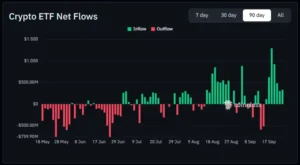

The cryptocurrency market experienced a “Black Friday” following the release of the latest US jobs report. The resilience of the traditional economy triggered a massive wave of liquidations in the bitcoin market, crossing $1.73B in just 24 hours and primarily impacting leveraged long traders. This robust labor landscape dampens the likelihood of a near-term interest rate cut by the Federal Reserve (Fed), strengthening the US dollar and draining liquidity from risk assets like bitcoin and cryptocurrencies.
A Jobs Report That Defied All Forecasts
The US Department of Labor shook up financial markets by revealing that the US economy added 172K non-farm payrolls during May 2026. The figure crushed the expectations of economists surveyed by Reuters, who had projected a modest increase of 85K jobs.
To make matters worse for the bears, previous data from March and April was revised upward, adding 93K more jobs than originally estimated. Growth was heavily driven by sectors such as leisure and hospitality (+70K) and local government (+55K), more than offsetting declines in financial activities (-22K).
This labor strength, combined with the rebound in the manufacturing index and job openings earlier in the week, catapulted the US dollar to a weekly gain of over 1%.
The Fed Has a Free Hand, and Bitcoin Is Paying the Price
For the crypto community, the takeaway from this macroeconomic data is straightforward: an overheated economy means sticky inflation. With such a rock-solid labor market, the Fed is in no rush to cut interest rates.
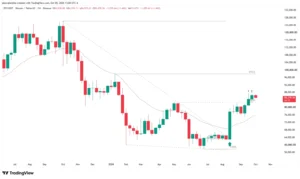
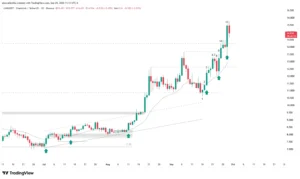
High rates benefit traditional fixed-income yields and the dollar, reducing the appeal of non-yielding assets like cryptocurrencies. Facing the prospect of “expensive” money for longer, speculative capital fled en masse, causing bitcoin to drop 5.33% in the last 24 hours. BTC is currently trading around $60,260.55, accumulating a harsh 18.09% decline over the past week.
Resulting Bloodbath: $1.44B in Long Positions Wiped Out
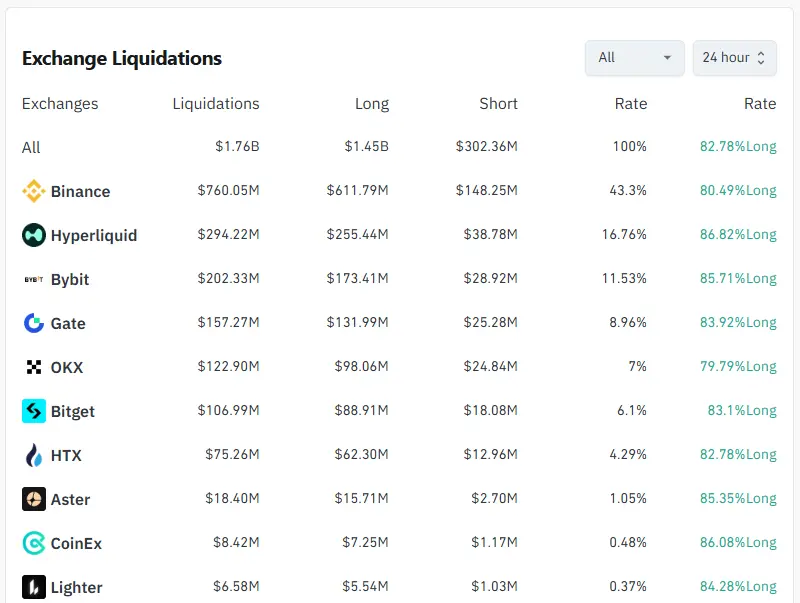
The impact on the derivatives ecosystem was immediate and devastating. According to data analyzed on the Coinglass platform, total liquidations across major exchanges reached $1.73B.
What is truly alarming is that 83.26% of these liquidations came from long positions (traders betting on a price increase), racking up gross losses of $1.44B. Global exchanges took a heavy hit:
Binance led total loss volume with $753.73M liquidated ($611.87M in longs).
Hyperliquid recorded $280.50M in total liquidations.
Bybit experienced the forced closure of $200.81M in futures contracts.
This massive capitulation demonstrates how excessive leverage often acts as fuel when macroeconomic variables rewrite the rules of the game from one moment to the next.
Market Impact
In the short term, the Bitcoin network and the broader crypto market face a period of forced consolidation and volatility. The “safe haven” narrative is being tested yet again against the harsh reality of United States monetary policy. As long as the US labor market continues to show muscles of steel, risk assets will trade under persistent bearish pressure. Key technical support levels will be critical in assessing whether institutional players will buy this dip or if we are headed into a deeper correction.
Disclaimer: This article is for informational and educational purposes only. It does not constitute financial, investment, or trading advice. Cryptocurrencies carry a high level of risk due to their inherent volatility.

Communications Professional. Crypto Enthusiast. Economic Journalist. Bitcoiner & Altcoiner.