
The decentralized finance (DeFi) ecosystem is turning its attention back to DeXe Protocol. After a long period of technical calm, on-chain metrics for the DEXE token on the Ethereum network reveal an unprecedented spike in transactional activity during the first months of 2026. With a record exceeding 100,000 cumulative transfers within a 90-day window, this surge sparks both enthusiasm among market bulls and alarms among crypto security auditors.
A Transaction Explosion Breaks Historical Calm
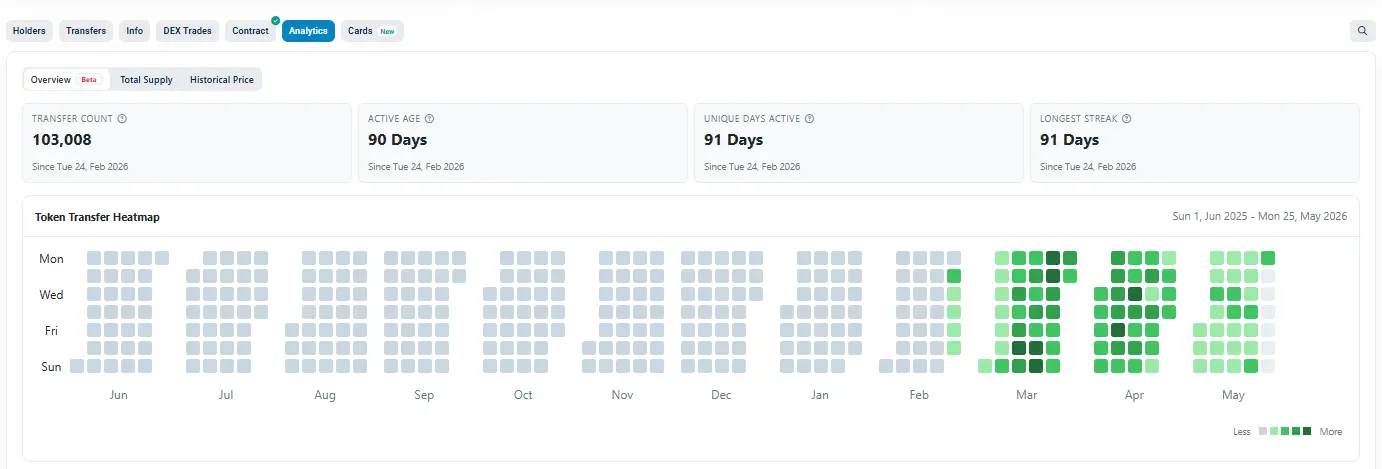
Historical analysis of the DEXE smart contract address on Etherscan (0xde4EE8057785A7e8e800Db58F9784845A5C2Cbd6) shows that the token operated within a highly predictable transfer channel since its launch. However, upon crossing the threshold into 2026, activity experienced a vertical breakout.
According to network heatmap and analytics data, the counter logged a total of 103,008 transfers during an uninterrupted 91-day streak of physical activity. The transactional peak concentrated heavily between March and April, where daily operation density shifted from minimal ranges (gray and light green blocks) to a state of constant boiling (dark green blocks).
This unusual volume suggests heavy wallet rebalancing or the execution of new governance dynamics within the DeXe ecosystem.
Supply Stability vs. Token Concentration
Despite the storm of movements across the ERC20 network, the token’s Total Supply chart has remained remarkably flat and solid, consolidating an issuance of 96.5M units. This stability rules out, for now, any fears related to uncontrolled minting or unexpected inflation events within the protocol’s smart contracts.
However, running the metrics through dispersion analysis tools like Bubblemaps flashes a caution light for retail investors. DEXE holds a Decentralization Score of just 20.88%. The vast majority of funds (95.23%) sit directly secured within smart contracts, while centralized exchanges (CEX) hold a mere 3.01% of the circulating liquidity.
This high concentration in corporate or governance contracts reduces selling pressure in the open market, but it also makes the ecosystem highly dependent on the decisions of a few control nodes.
Technical Audit: Alerts in the “Smell Test”
For a millennial audience looking not just for yield but also to mitigate risk (“rug pulls”), scanning tools like Token Sniffer deliver a bittersweet result. DEXE scores a 15 out of 100 on its basic security test.
What explains this low grade? It stems primarily from the structure of its 62 coded functions. Detection platform GoPlus identifies a critical Medium Risk: the presence of an active whitelist function and the ability to remove addresses via removeFromWhitelist. In pure decentralized protocols, developers look at these functions with suspicion, as they grant creators the technical power to restrict trading for specific wallets under certain conditions.
What to Expect Short-Term?
The massive reactivation of DEXE transfers points to the project undergoing an internal restructuring or an aggressive accumulation phase by institutional players. Its controlled supply acts as a tailwind for the asset’s price action if demand continues to scale. However, smart investors must weigh this volume explosion against the code’s centralization alerts before taking heavy positions.
Disclaimer: This analysis is strictly for informational and educational purposes. The crypto asset market presents high volatility. It does not constitute financial advice or an investment recommendation.

Communications Professional. Crypto Enthusiast. Economic Journalist. Bitcoiner & Altcoiner.